
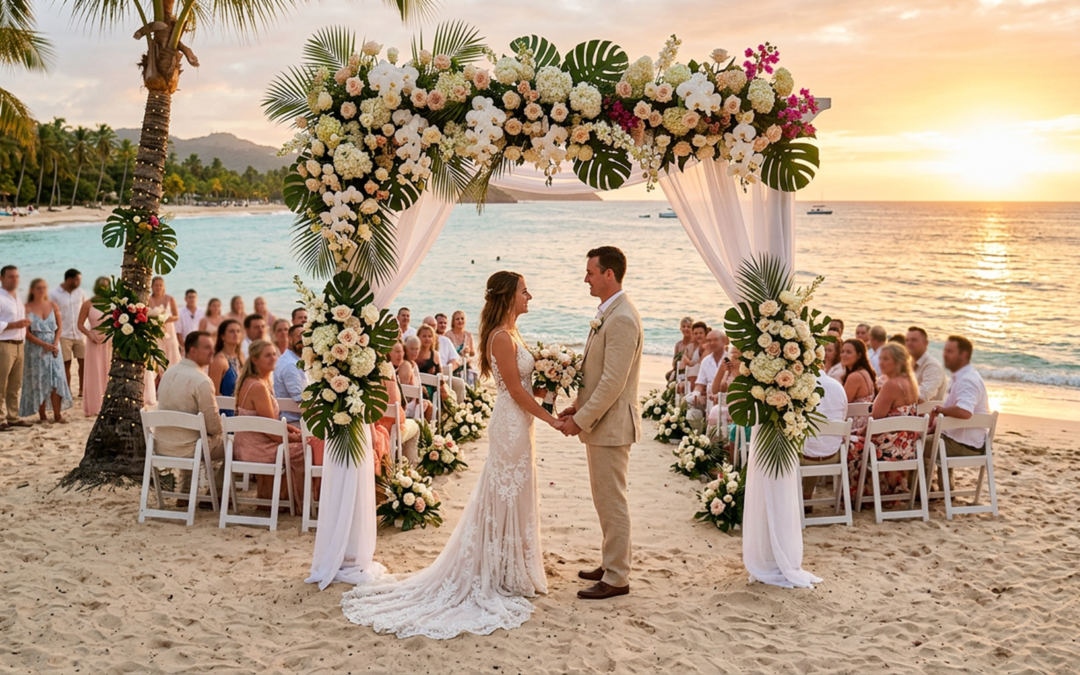
You said yes. You have the ring, the excitement, and a vision of something bigger than a ballroom — something with ocean air, warm sand, and a backdrop that takes your breath away.
Mexico and the Caribbean are two of the most popular destination wedding regions in the world. And for good reason: stunning venues, all-inclusive options that simplify the planning process, warm weather year-round, and a wide range of resorts built specifically to host weddings for couples of every kind.
But here is what no one tells you upfront: planning a destination wedding is not just planning a wedding. It is planning a wedding and coordinating travel for everyone attending — with contracts, legal requirements, room blocks, guest communications, and supplier relationships that require real expertise to navigate well.
This guide will walk you through every major phase of destination wedding planning in Mexico and the Caribbean — from choosing your destination to making sure your guests arrive informed, prepared, and excited to celebrate with you.
Step 1: Choose Your Destination Before You Choose a Venue
This is one of the most important sequencing decisions in destination wedding planning, and it is one that many couples get backwards. They fall in love with a specific resort image on Instagram before they have thought through the destination itself.
Your destination decision should be driven by a few key factors: how easy it is for your guests to get to, the time of year you are planning to marry, your budget range, the kind of atmosphere you want, and whether the destination is welcoming to all couples — including LGBTQ+ couples.
Mexico — What to Know
Mexico is one of the most accessible destination wedding locations for U.S. couples and their guests. Direct flights from most major cities, no passport required for U.S. citizens traveling to tourist zones (though strongly recommended), and a wide range of resort options at multiple price points make it a practical and beautiful choice.
Top destination wedding regions in Mexico include Los Cabos (dramatic desert-meets-ocean scenery, upscale resorts), the Riviera Maya and Tulum (lush jungle, cenotes, Mayan heritage, soft sand beaches), Puerto Vallarta (Pacific coast, vibrant culture, boutique luxury), and Cancun (high-energy, major airport hub, extensive resort selection).
The Caribbean — What to Know
The Caribbean offers a range of island experiences, each with its own personality. Punta Cana in the Dominican Republic is one of the top all-inclusive destination wedding hubs in the world, offering large resort complexes with dedicated wedding departments and competitive group pricing. Jamaica offers lush landscape, vibrant culture, and iconic beach scenery. Turks and Caicos provides a more intimate, ultra-luxury experience. Aruba sits outside the hurricane belt, making it a lower-weather-risk option for couples marrying in summer or early fall.
Each island also has its own legal requirements for marriage ceremonies, which is one of the most critical things to understand before you commit to a location.
| Destination selection checklist: ✓ Flight accessibility for the majority of your guest list ✓ Travel season — avoid peak hurricane season (June–November) for some islands unless resort insurance is in place ✓ Legal marriage requirements for that specific country ✓ LGBTQ+ inclusivity and legal recognition at your chosen destination ✓ All-inclusive vs. boutique venue — know which experience you want ✓ Budget range and how it aligns with local resort pricing tiers |
Step 2: Understand the Legal Requirements for Marrying Abroad
This is where many couples are caught off guard. Every country has its own legal requirements for officiating a marriage, and failing to meet them can mean your ceremony is legally a symbolic one — not a legally binding marriage — without you realizing it until it is too late.
In Mexico, a civil ceremony must be performed by a Civil Registry judge. This typically requires residency papers, birth certificates, blood tests, and a waiting period. Many couples choose to legally marry at their local courthouse before they leave and have a symbolic ceremony at the resort — which is a completely valid and increasingly common approach.
In the Caribbean, requirements vary significantly by island. Some islands require advance document submission of six to eight weeks. Others allow quicker turnarounds. Some require witnesses who are nationals of that country. A destination wedding specialist will know the current requirements for your specific location and help you navigate the paperwork process so there are no surprises.
Do not rely on resort wedding coordinators alone for legal guidance. They manage the event — a certified destination wedding planner manages the full picture, including the legal framework.
Step 3: Book the Resort and Negotiate Your Room Block
Most all-inclusive resorts in Mexico and the Caribbean offer complimentary or discounted wedding packages when a minimum number of room nights are booked by your guest group. This is called a room block — and how it is negotiated matters significantly to your overall costs and guest experience.
A room block is not just a group reservation. It is a contract. It specifies how many rooms you are committing to, the rate per room, the booking deadline for guests, what happens if the block is not filled, and what wedding benefits are unlocked based on attendance.
Negotiating a room block requires industry relationships and knowledge of what is standard versus what is negotiable. A destination wedding specialist with supplier connections can often secure benefits — suite upgrades, resort credits, complimentary rooms for the couple, private event access — that a couple booking on their own would not have access to.
| 📋 Related Resource For a deeper look at how destination wedding travel logistics are coordinated for your guests, visit www.wedding-organiser.com |
Step 4: Build Your Guest Communication Plan
Your guests cannot attend if they do not know what to do — and destination wedding guests need more guidance than guests attending a local event. They are booking flights, arranging time off work, coordinating passports, and often traveling internationally for the first time.
A solid guest communication plan includes a save-the-date sent at least twelve months in advance for international travel, a wedding website with destination information and travel FAQs, clear booking instructions for the room block, passport and documentation reminders, a deadline for room block bookings with a follow-up reminder, and a pre-departure communication covering what to expect at arrival.
The couples who have the smoothest destination weddings are the ones whose guests felt informed and supported throughout the process — not overwhelmed or left to figure things out on their own.
| Guest communication timeline: ✓ 12+ months out: Save-the-date with destination announcement ✓ 10–11 months out: Wedding website live with travel details and room block link ✓ 8–9 months out: Formal invitations with RSVP and booking deadline ✓ 6 months out: Follow-up for guests who have not booked ✓ 3 months out: Passport and document reminder ✓ 4–6 weeks out: Pre-departure communication with arrival details ✓ 1–2 weeks out: Final confirmation and on-site contact information |
Step 5: Understand What the Resort Wedding Package Does — and Does Not — Include
All-inclusive resort wedding packages vary enormously. Some include everything from florals to photography to the wedding cake. Others are a base package designed to upsell you on every additional element. Reading the contract carefully — and understanding what is actually included versus what is presented as included — is one of the most important services a destination wedding planner provides.
Common inclusions in resort wedding packages: ceremony space, a basic floral setup, officiant, wedding cake, a complimentary suite for the couple, and a private dinner or cocktail hour. Common exclusions: photography and videography (almost always an add-on), hair and makeup, upgraded florals, entertainment, legal ceremony fees, and gratuities.
Ask specifically about outside vendor policies. Some resorts restrict which vendors are permitted on property or charge outside vendor fees. If you have a specific photographer in mind, verify their access before you sign anything.
Step 6: Protect Your Investment With Travel Insurance
Destination weddings represent a significant financial investment — not just for the couple, but for every guest who books flights, hotels, and time away. Travel insurance is not optional for events of this scale. It is essential.
At minimum, the couple should carry wedding insurance that covers supplier cancellation, venue closure, and postponement due to weather or unforeseen events. Guests should be strongly encouraged to purchase trip protection that covers cancellations, medical emergencies, and travel disruptions.
A destination wedding travel specialist will walk you through the right coverage options for your specific destination, travel dates, and group size — and make sure you understand exactly what you are protected against before your first deposit clears.
Step 7: Work With a Certified Destination Wedding Specialist
Everything covered in this guide — destination selection, legal requirements, room block negotiation, guest communication, contract review, travel protection — is the full-time work of a certified destination wedding planner. It is not something that should be pieced together from Pinterest boards and resort brochures.
A specialist does not just save you time. They protect your money, prevent the mistakes that couples do not know to avoid, and serve as your professional advocate with resorts, vendors, and suppliers from the first inquiry to the day you say I do.
At Illusionz Destination Weddings, we specialize in exactly this — guiding couples through every layer of the destination wedding process with expertise, care, and a commitment to making your celebration as flawless as the destination itself.
We are inclusive and affirming. Every love story is welcome here. Every couple deserves a wedding that reflects who they are — and we are honored to help make that happen.
Ready to start planning your destination wedding in Mexico or the Caribbean?
Contact Illusionz Destination Weddings today for a consultation. We serve couples across Virginia, Maryland, and North Carolina and specialize in destination weddings, honeymoons, and romance travel worldwide.
Phone: (804) 767-0862 | Email: info@illusionzdestinationweddings.com
Website: www.illusionzdestinationweddings.com
Inclusive & Affirming — Every Love Story, Flawlessly Planned.
Also explore these trusted resources:
For destination wedding travel logistics and wedding planning tools: www.wedding-organiser.com
Q: How do you plan a destination wedding in Mexico or the Caribbean?
A: Planning a destination wedding in Mexico or the Caribbean involves choosing the right destination based on guest accessibility and legal requirements, booking a resort and negotiating a room block, building a guest communication timeline, reviewing resort wedding package inclusions and exclusions, and securing travel insurance. Working with a certified destination wedding specialist ensures every detail is managed professionally.
Q: What are the legal requirements for getting married in Mexico?
A: In Mexico, a legally binding civil ceremony requires a Civil Registry judge, birth certificates, blood tests, and typically a waiting period. Many couples marry legally at home and hold a symbolic ceremony at the resort. Requirements vary by state within Mexico.
Q: What is a room block for a destination wedding?
A: A room block is a contracted group reservation at a resort that secures a set number of rooms at an agreed rate for wedding guests. Properly negotiated room blocks can unlock complimentary wedding benefits, suite upgrades, and resort credits for the couple. Deadline management and contract terms are critical to avoid financial liability.
Q: What does a destination wedding package include?
A: Resort destination wedding packages typically include a ceremony space, basic floral setup, officiant, wedding cake, and a private event. Photography, upgraded florals, hair and makeup, entertainment, and legal ceremony fees are commonly excluded and charged separately.
Q: What is Illusionz Destination Weddings?
A: Illusionz Destination Weddings is a romance travel and destination wedding agency based in Hampton Roads, Virginia, founded by Certified Wedding Planner and LGBTQ+ Romance Travel Specialist Shawndra Long. The agency serves couples across Virginia, Maryland, and North Carolina and specializes in destination weddings, honeymoons, and celebration travel in Mexico, the Caribbean, and beyond.