
Every couple reaches this fork in the road eventually: do we say “I do” close to home, surrounded by everything familiar, or do we gather our favorite people somewhere new and make the trip itself part of the story? There’s no wrong answer here. The right wedding is the one that feels like you. My job is just to help you see both paths clearly so you can choose with confidence.
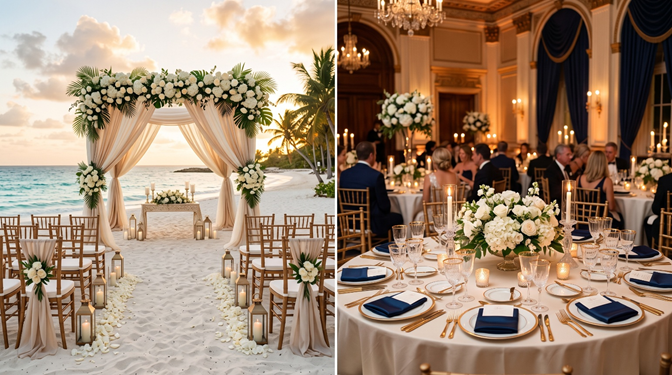
What Makes a Wedding “Destination” vs. “Traditional”?
A traditional wedding typically happens in or near your hometown, often at a familiar venue like a church, banquet hall, or local event space, with guests who can drive or take a short flight to attend. A destination wedding takes place somewhere that requires travel for most or all of your guests, whether that’s a beach resort in Mexico, a countryside estate in Scotland, or a boutique hotel in a city neither of you have visited before.
Both are valid. Both are beautiful. The difference comes down to logistics, budget, guest experience, and the kind of memory you want to build.
Cost: Where the Money Actually Goes
This is the comparison couples ask about most, and the honest answer is: it depends on scale, not just location.
- Traditional weddings often carry higher per-guest costs at home because couples tend to invite larger guest lists (100 to 250+ guests is common), and local vendor pricing in many U.S. metro areas has climbed significantly.
- Destination weddings usually involve smaller guest counts (often 30 to 80 guests), which can offset travel costs with savings on catering, florals, and rentals.
- All-inclusive resort packages frequently bundle the ceremony, reception, florals, and even the cake into one price, which simplifies budgeting in a way a hometown wedding rarely can.
- Guests take on more of the cost for a destination wedding (flights, hotel), while the couple absorbs more of the cost for a traditional wedding (venue, catering, rentals for a larger group).
Neither format is automatically cheaper. A 200-guest hometown wedding will often cost more overall than an intimate destination celebration, but a destination wedding with a large guest list flown to a luxury resort can just as easily be the pricier option.
Guest Experience: Quick Celebration vs. Multi-Day Reunion
A traditional wedding is typically a single-day event: ceremony, reception, goodnight. Guests attend, celebrate, and go home.
A destination wedding stretches the celebration into a multi-day experience. Guests often arrive a day or two early and stay a day or two after, which means welcome dinners, group excursions, beach days, and far more time actually spent with the people you love, rather than a rushed hour of conversation at a reception table.
For couples whose families and friends are scattered across the country, this reunion effect is one of the most underrated benefits of choosing a destination wedding.
Planning Timeline and Logistics
Traditional weddings in popular markets often need to be booked 12 to 18 months out due to venue demand. Destination weddings can sometimes move faster since resort wedding coordinators are built into the package, but couples still need 10 to 12 months to give guests enough notice to book flights and time off work.
A skilled destination wedding planner also handles the pieces couples don’t see coming: marriage license requirements in a foreign country, vendor contracts in a different time zone, room block negotiations, and travel insurance guidance. This is where working with a planner who specializes specifically in destination and group travel weddings, rather than a general local wedding planner, makes a measurable difference.
Inclusivity and Peace of Mind
For LGBTQ+ couples in particular, destination choice carries an extra layer of consideration: is this a location and resort where we will be celebrated, not just tolerated? Legal recognition, resort culture, and local attitudes vary widely by country and even by property, which is why vetting the destination and vendor team in advance matters as much as vetting the venue itself.
A wedding planner who understands both the legal landscape and the on-the-ground culture of a destination can steer couples toward locations and resorts that are genuinely affirming, and away from ones that only look that way in marketing photos.
So, Which One Is Right for You?
Ask yourselves:
- Do we want an intimate, multi-day experience with our closest people, or a larger single-day celebration with everyone we know?
- Is travel a joy for our families, or a genuine hardship?
- Do we want the simplicity of an all-inclusive package, or the control of building every detail ourselves at home?
- Does our dream venue already exist close to home, or does it live somewhere we’ve never been?
There’s no universal right answer, only the right answer for the two of you. Whichever path you choose, the goal is the same: a day that feels unmistakably yours, surrounded by the people who matter most.
Frequently Asked Questions
Is a destination wedding cheaper than a traditional wedding?
It can be, but it depends on guest count and venue choice rather than location alone. Smaller destination weddings with all-inclusive packages often cost less overall than large traditional weddings, but a big-guest-list destination wedding at a luxury resort can cost more.
How far in advance should we plan a destination wedding?
Most couples should plan 10 to 12 months ahead to give guests time to arrange flights, accommodations, and time off work, and to secure preferred vendors and dates.
Do fewer guests attend destination weddings?
Generally, yes. Destination weddings average smaller guest counts because travel is a bigger ask than a local RSVP, which is part of why many couples prefer them for a more intimate feel.
Are destination weddings legally binding?
Yes, when the proper marriage license and legal requirements for that specific country or state are completed correctly. Requirements vary by destination, which is one of the most important things a destination wedding planner manages on the couple’s behalf.
Is it possible to have an LGBTQ+-affirming destination wedding?
Absolutely. Many destinations and resorts around the world are genuinely welcoming and celebratory of LGBTQ+ couples. Working with a planner who vets destinations specifically for legal recognition and on-the-ground culture helps ensure the celebration is safe and joyful from start to finish.