It’s one of the first questions I ask every couple planning a destination wedding, and it surprises most of them: do you want your ceremony abroad to be legally binding, or symbolic?
Most couples don’t realize there’s a choice. And once they understand the difference, the majority choose an option they’d never heard of a week earlier.
The Difference in One Sentence
A legal ceremony creates a marriage recognized by law in the destination country and, generally, back home; a symbolic ceremony is the full wedding experience — vows, officiant, rings, celebration — without the legal paperwork, because the couple completes the legal marriage privately at home before or after the trip.
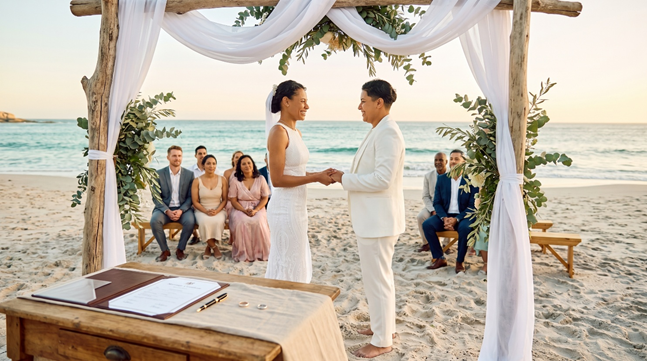
Here’s what matters: your guests will never know the difference. A symbolic ceremony looks, sounds, and feels identical to a legal one. The only thing missing is the government filing.
What a Legal Ceremony Abroad Actually Requires
Marrying legally in another country means satisfying that country’s requirements, which can include:
- Residency periods — Some countries require you to be physically present for a set number of days before the ceremony can legally occur.
- Document requirements — Birth certificates, passports, and sometimes divorce decrees or single-status affidavits, often needing certified translation and apostille (an international authentication of the document).
- Blood tests and medical requirements — Still required in some destinations, performed locally, at your expense.
- Government fees and civil officiants — Legal ceremonies typically must be performed or registered by an authorized civil official, sometimes only on weekdays and only in certain languages.
- Processing timelines — Your official marriage certificate may arrive weeks or months later, in the destination country’s language, requiring translation for use at home.
None of this is impossible. But it adds cost, lead time, rigidity, and paperwork to a day that’s supposed to be about the two of you.
Why Most Couples Choose Symbolic
The couple handles the legal marriage at their local courthouse — often just days before departure — then has the full wedding celebration abroad. The benefits are practical:
- Total flexibility — Any date, any time, any officiant, any location on the property, no government schedule to work around.
- Lower cost and less paperwork — No translations, apostilles, foreign fees, or document couriers.
- A clean legal record at home — Your marriage certificate is issued in your home state, in English, with no foreign registration to track down years later.
- No residency clock — Arrive the day before the wedding if you want to.
A Note for LGBTQ+ Couples
This decision carries extra weight for same-sex couples, because not every destination legally recognizes same-sex marriage — and some destinations that welcome LGBTQ+ tourism still do not perform legal same-sex ceremonies. A symbolic ceremony paired with a legal marriage at home gives couples full freedom to celebrate in a destination they love while keeping their legal marriage secure under U.S. law. As an LGBTQ+ Wedding Certified specialist, I guide couples to destinations and resorts that are genuinely affirming — not just tolerant — so the celebration feels as safe as it is beautiful.
When a Legal Ceremony Abroad Makes Sense
Some couples want the marriage to legally happen in a place that’s meaningful to them — a heritage country, the place they met, or a destination with simple requirements. Others are expats or dual citizens for whom the foreign jurisdiction is home. If the legal route matters to you, the key is choosing a destination whose requirements you can realistically meet, and building the timeline around them from day one.
The Bottom Line
Legal or symbolic isn’t a question of which wedding is ‘real’ — both are real. It’s a question of where the paperwork happens. Get clear on that decision early, because it shapes your destination options, your timeline, and your budget more than almost any other choice you’ll make.
Planning a destination wedding and not sure which path fits? Contact Illusionz Destination Weddings at (804) 767-0862 or info@illusionzdestinationweddings.com. Serving couples nationwide.
FAQ
Is a symbolic destination wedding a real wedding?
Yes. A symbolic ceremony includes vows, an officiant, rings, and the full celebration — it’s identical to a legal ceremony in experience. The couple simply completes the legal marriage paperwork at home, before or after the trip.
Do guests know the difference between a legal and symbolic ceremony?
No. Unless the couple tells them, guests cannot tell the difference. The ceremony looks and feels exactly the same either way.
Is a marriage performed legally abroad recognized in the United States?
Generally, yes — a marriage that is legally valid in the country where it was performed is typically recognized in the U.S. Couples should keep certified and translated copies of the foreign marriage certificate for records like name changes and benefits.
Why do most destination wedding couples choose a symbolic ceremony?
Flexibility and simplicity. Symbolic ceremonies avoid foreign residency requirements, document translations, apostilles, and government fees, and allow any date, time, and officiant — while the legal marriage is handled easily at home.
Should LGBTQ+ couples choose a symbolic ceremony abroad?
Often, yes. Because not all destinations legally recognize or perform same-sex marriages, a legal marriage at home paired with a symbolic celebration abroad protects the couple’s legal status while allowing them to celebrate in an affirming destination of their choice.